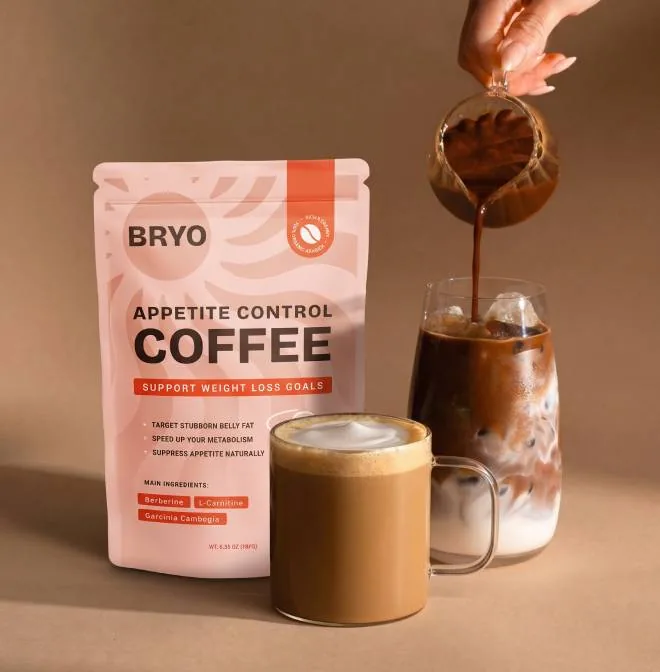
BRYO Appetite Control Coffee: An Appetite Suppressant Coffee Made for Cravings
BRYO Appetite Control Coffee is a smooth arabica coffee blend created for people who want their morning coffee to do more than wake them up. The idea is simple: keep the ritual you already have, and use it to support appetite control, steady energy and everyday weight management. This page is an independent overview of the product before you visit the official BRYO store.
Does coffee suppress appetite?
Research on coffee has looked at this question for years, and the short answer is that coffee may blunt hunger for a while in many people. Caffeine is a mild stimulant that acts on the nervous system, and studies suggest that coffee consumption can influence energy intake at the next meal. A warm cup also fills the stomach with a low calorie drink, which can add to a feeling of fullness and satiety.
Several trials report that people who drank coffee before a meal ate slightly fewer calories per day than people on a similar diet without it. A meta-analysis of caffeine consumption and food intake pointed in the same direction, though many studies were small. Coffee is not an anorectic drug, and no dietitian would call it an effective appetite suppressant on its own — but as part of diet and exercise it can make the gap between meals easier.
How coffee affects hunger and cravings
There are three mechanisms usually described. First, caffeine raises alertness and can raise metabolic rate for a short period, which is why coffee is often linked with fat mass and body fat research. Second, black coffee contains chlorogenic acid, a polyphenol studied for its effect on how the body handles carbohydrates. Third, the drink itself is warm and almost calorie free, so it occupies the space a snack would take.
Food cravings are rarely about hunger alone. A cup of coffee gives you a pause, and for many people that pause is enough to reduce cravings for sugar in the afternoon. This is the everyday reason coffee habits show up so often in weight management routines.
What is inside the BRYO coffee blend
BRYO is an instant arabica coffee blend, so preparation is the same as any regular coffee: one scoop, hot water, done. According to the manufacturer, each serving combines caffeinated coffee with berberine, L-carnitine and garcinia cambogia — three ingredients commonly used in products that support appetite control. There is no shake to mix and nothing to refrigerate.
- Arabica coffee base with the taste of a normal morning coffee
- Ingredients chosen to support appetite control and steady energy
- Low calorie when taken black, without adding cream, whole milk or syrup
- One cup replaces the coffee you already drink, so nothing new is added to your day
Results vary from person to person. BRYO is a food product, not a medicine, and it does not treat obesity, type 2 diabetes or any other condition.
How much coffee should you drink to control appetite?
Most of the research on coffee intake sits between two and four cups of coffee per day. Going far above that does not make the effect stronger; it mainly raises the chance of side effects such as jitteriness or poor sleep. A practical routine is one cup in the morning and, if needed, a second one a few hours before a meal you tend to overeat.
Timing matters more than volume. Drinking coffee about 30 minutes before eating is the window most often mentioned, because that is when caffeine intake peaks in the blood. Late afternoon cups are best avoided if caffeine affects your sleep.
Black coffee, decaf and the calories you add
A cup of black coffee has almost no calories. The problem is what goes in it: adding cream, whole milk, sugar or flavoured syrup can turn a free drink into 150 calories or more. If you are using coffee for weight management, the simplest change is to drink coffee black or with a splash of milk.
Does decaffeinated coffee work too? Decaf keeps the polyphenols, including chlorogenic acid, but loses most of the stimulant effect, so the appetite response is usually weaker. Some people still prefer decaf in the evening. MCT oil coffee and bulletproof style recipes are popular, but they add fat and calories, which defeats the point for most people.
Who BRYO is for — and who should be careful
BRYO is aimed at adult coffee drinkers who already have a daily cup and want that cup to support their goals. It is not for children, and people who are pregnant, breastfeeding, sensitive to caffeine, or taking medication should speak to a medical doctor before adding any caffeinated coffee product or dietary supplement to their routine.
Nothing here is peer-reviewed scientific advice and none of these statements have been evaluated by the Food and Drug Administration. This product is not intended to diagnose, treat, cure or prevent any disease.
Frequently asked questions
What coffee can suppress appetite?
Any strong black coffee can take the edge off hunger for an hour or two. Blends built for this purpose, such as BRYO Coffee, add ingredients that support appetite control on top of the caffeine already in the coffee.
How much coffee should I drink to suppress my appetite?
Two to three cups per day is the range most people settle on. Four cups of filter coffee is roughly the upper limit used in research on coffee, and more than that brings little extra benefit.
Does coffee help you lose weight on its own?
No. Coffee may help you lose weight only as a small part of a plan that includes food intake, movement and sleep. Treat it as support, not as a solution.
Will decaf coffee also suppress your appetite?
Decaf has a milder effect because the caffeine is removed, but the warm drink and the polyphenols remain, so some people still feel fuller.
Where can I buy BRYO Appetite Control Coffee?
BRYO is sold through the official store, which currently lists discounted bundles with free shipping and a 30-day money back guarantee. Use the button on this page to see today's pricing and availability.
Shop BRYO NowAdvertising disclosure: this page is an independent overview and may earn a commission on purchases made through the official store. Statements have not been evaluated by the Food and Drug Administration. This product is not intended to diagnose, treat, cure or prevent any disease.